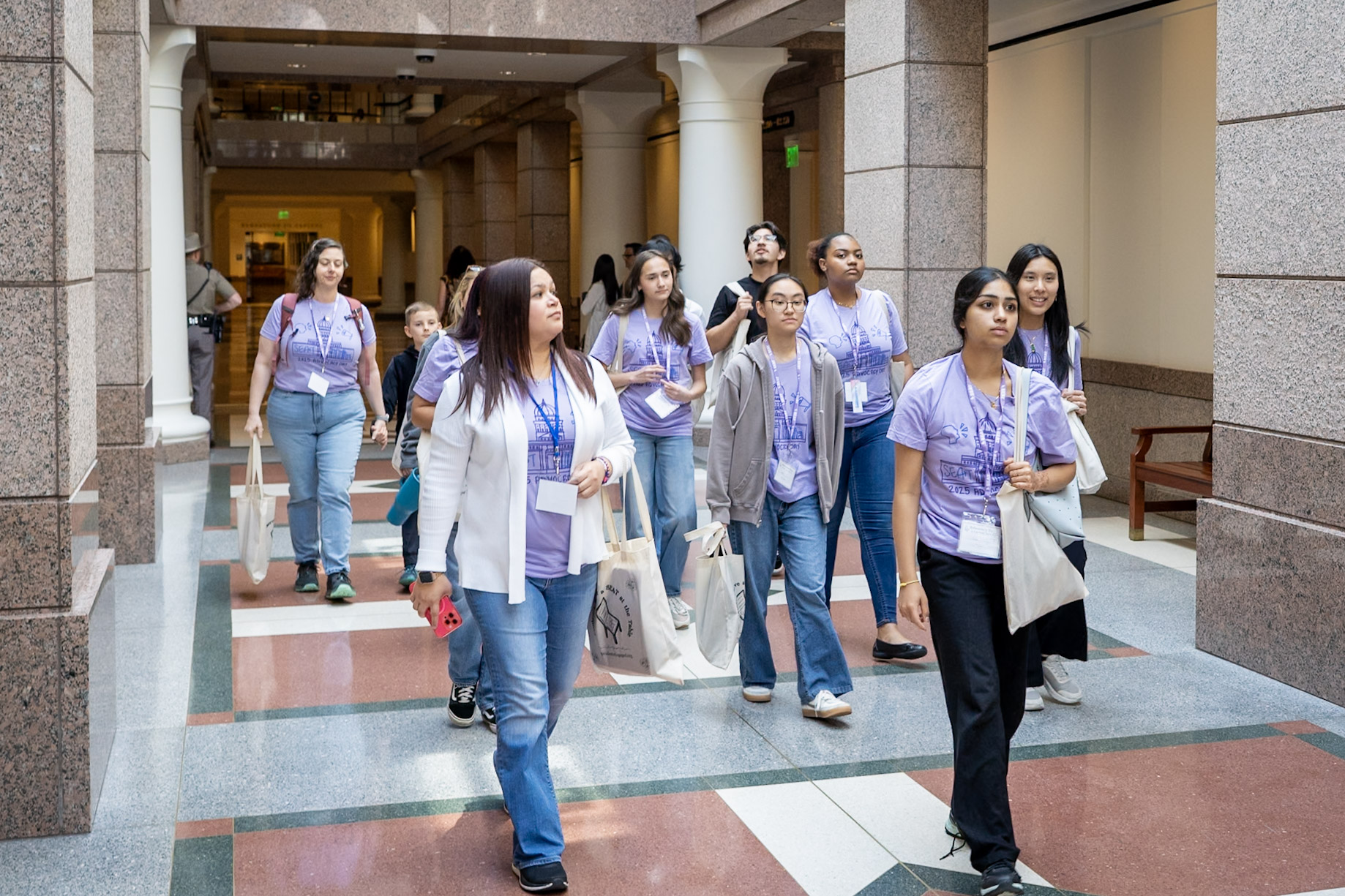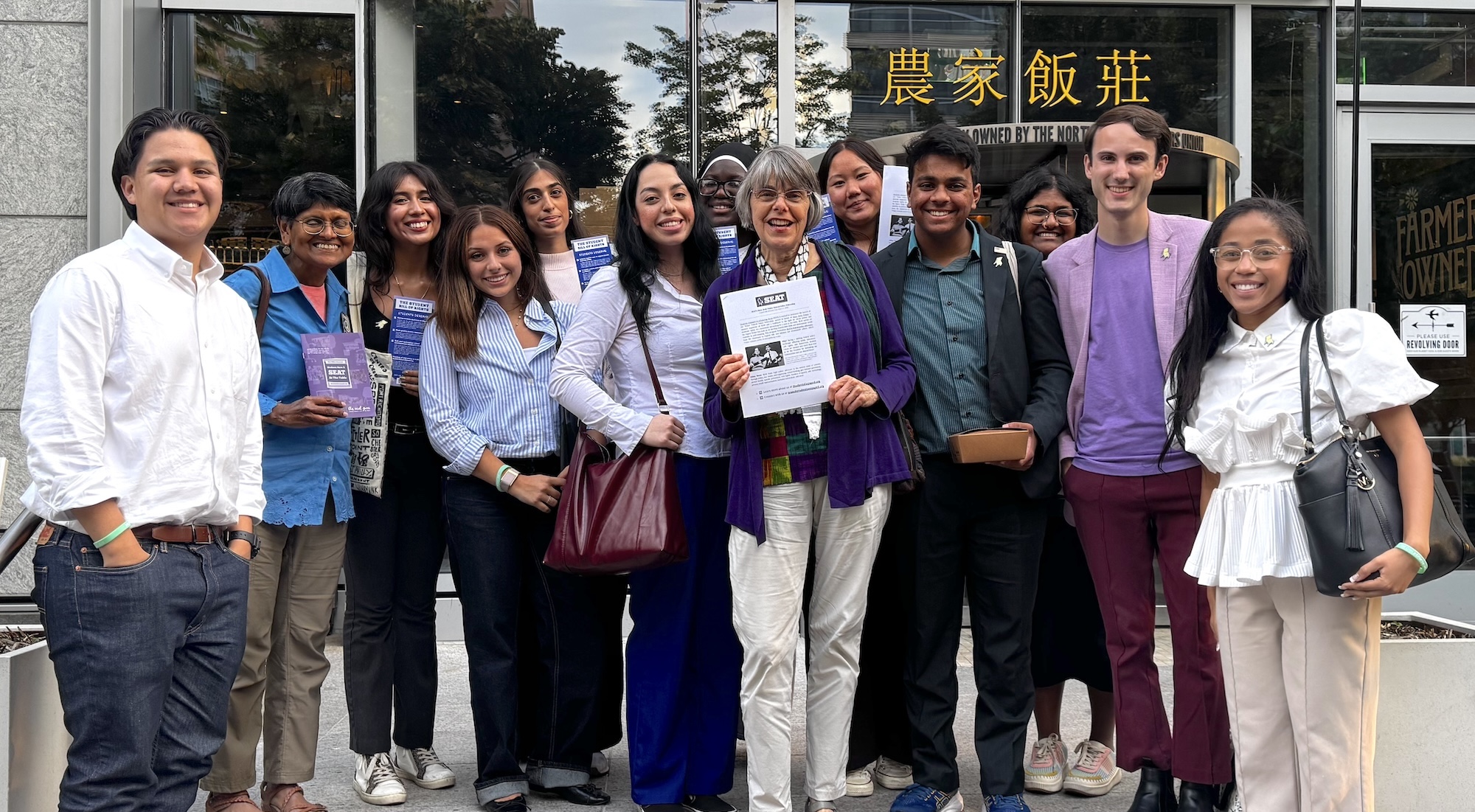
SEAT's Federal Policy Fellowship is named in honor of Mary Beth Tinker, a staunch supporter of SEAT and a trailblazer in the fight for social justice and students’ rights. As a movement advocating for a seat at the table, SEAT carries on the legacy Tinker has built as we develop transferable skills and demonstrate youth visibility in policymaking. This program formalizes SEAT’s federal policy advocacy, from the classroom to Capitol Hill, and bolsters our movement’s pillars, which Tinker remains active in exemplifying today.
Fellowship Purpose
Facing a shifting federal policy landscape affecting public education, civil rights, and democracy, student voices are needed now more than ever to be the frontline for defending our communities and our shared future.
The Tinker Fellowship offers an intensive and highly-skilled curriculum to engage students in federal advocacy from the grassroots. As many youth find federal policy as a space that seems so foreign, SEAT intends to bust public angst and disillusion by demonstrating that federal policy can truly be a powerful avenue for young people to make a difference and shape policies affecting our everyday lives.
Spring 2026 Highlights
SEAT brought a dozen students to Capitol Hill for the inaugural cohort of the Tinker Fellowship. During the 5-day trip, fellows organized a Congressional briefing on SEAT's Youth Mental Health Agenda with Congresswoman Yassamin Ansari, hosted a community reception with Mary Beth Tinker and Congressman Christian Menefee, and visited 300+ Congressional offices to distribute policy briefs. Fellows experienced committee hearings with cabinet secretaries, a private tour of the Senate chamber during a midnight vote-a-rama, and a documentary screening on student organizing.
Policy Focus
Alongside success with SEAT’s Youth Mental Health Agenda in Congress and the Biden-Harris Administration, SEAT leads high-caliber advocacy in the following areas of concern through policy, law, media, and organizing:
- The attempted dismantling of the U.S. Department of Education.
- The gutting of federal education funding and assistance programs.
- The abolishment of civil rights oversight in the Education and Health & Human Services departments.
- The federal voucher program in the One Big Beautiful Bill that takes millions of dollars to fund private schools.
Program Expectations
The program meets virtually every other week, February to June, for two hours. Students must be willing to commit to attending all virtual sessions, an in-person trip to Capitol Hill, and completing asynchronous assignments regarding SEAT legislative advocacy, fellows’ own capstone projects, and preparing for the DC trip.
The cohort of approximately 7-10 students receives a $250 stipend near program completion and an all-expenses-paid trip to Washington, D.C. in June 2026 where they will advocate for various education and youth-related policies, intertwined with the capstone advocacy projects that they have been working on.
SEAT commits to supporting fellowship alumni in their ongoing endeavors, connecting them with influential people in advocacy and on the Hill, and helping them gain invaluable experience and political knowledge that will come in handy in all future opportunities, leadership, and public engagement.
A full curriculum outline can be found here.
Participant Eligibility
- Students must be a Texas resident, native, or graduate from a Texas high school.
- The program is open exclusively to high school juniors, seniors, and college undergraduate students.
- Previous experience in some sort of legislative advocacy (either state or federal) is required as a pre-requisite for this program.
- Students from rural communities, low socioeconomic backgrounds, and historically marginalized backgrounds will be prioritized.
- Students should have a flexible schedule allowing them to engage during business hours (i.e. taking meetings or communicating with the SEAT team).
- This is an intensive and time-consuming program. Individuals should only apply if they can fully commit.
- Students under the age of 18 must have a parent or legal guardian approve an agreement with SEAT regarding public engagement, media, and travel.
Applications CLOSED: Jan 31, 2026 at 11:59 PM (local time)
The Tinker Fellowship will return after the 90th Texas Legislature. In the meantime, students should consider applying for other SEAT programs, including the Texas Legislative Fellowship, Creator Collective, and Chapter Leadership.