When schools deprive students' rights, we organize to defend our rights because we own our education. This hub includes a variety of resources from SEAT and our partners to help you advocate for yourself and your community.
Check out our Get Involved page for more, and print our Know Your Rights cards for school lanyards!
The Civil Rights Act of 1964 prohibits discrimination on race, color, religion, sex or national origin in public accommodations and federally funded programs – schools!
Title IX prohibits discrimination on sex, pregnancy, sexual orientation, and gender identity in any education program or activity receiving federal financial assistance.
Tinker v. Des Moines (1969) safeguards students' constitutional First Amendment rights to free speech and expression at public schools if not causing a "substantial disruption."
Table of Contents
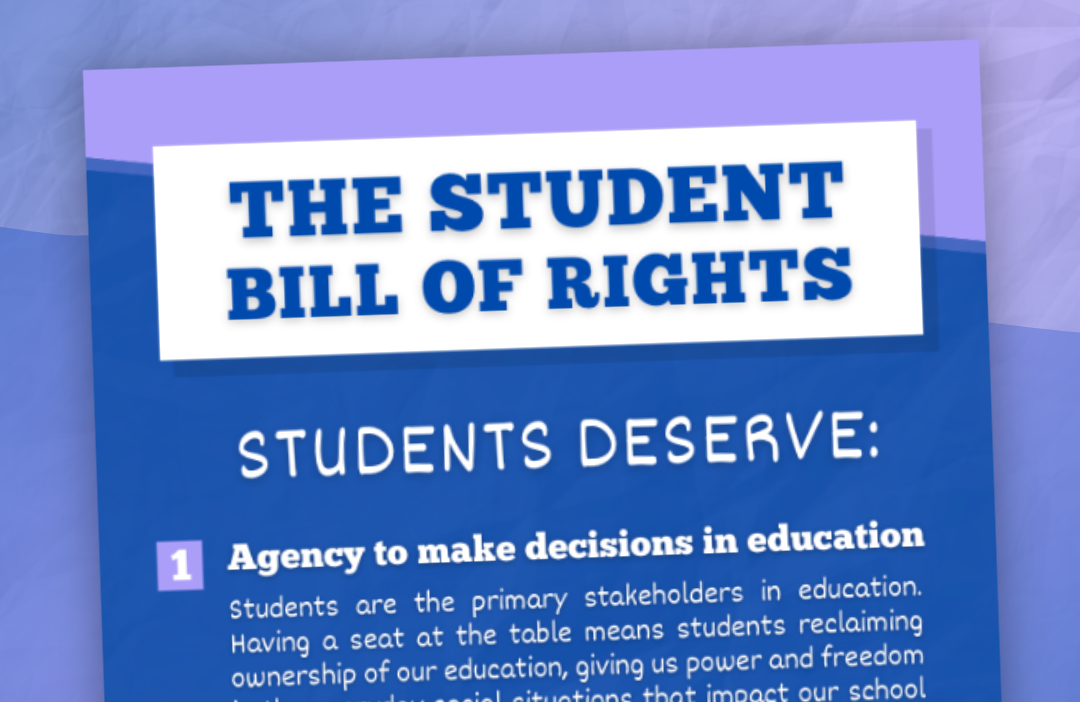
Delivered to 1,200+ Texas lawmakers, SEAT's declaration outlines universal rights for students in the context of schools and education.
We crafted this document over the period of 5 months with 100+ students across Texas to demonstrate our best reflection of student experiences.
We are working each day to reach these ideals for education in Texas. Read our 8 points as you begin to join us in advocacy.
Access streamlined information about Texas school boards and student-led initiatives.
• YOU DO NOT HAVE TO OPEN THE DOOR unless there is a judicial warrant.
• YOU ARE NOT REQUIRED TO ANSWER QUESTIONS from an immigration or other law enforcement agent. You can invoke your right to remain silent
• DO NOT SIGN ANYTHING without speaking to a lawyer first. You have the right to.
• If you are outside of your home, ask the agent if you are free to leave. If they say yes, leave.
If you are facing the impact of SB 12, the Student Identity Censorship Law, read this Fact Sheet on SB 12 to understand what it does and doesn't legally mandate.
SEAT has filed a lawsuit with the ACLU of Texas against SB 12. Please reach out to SEAT and/or complete the Intake Form if you can share your SB 12 experiences with us.
Children's Defense Fund Texas collaborated with students across Texas to develop the comprehensive Student Advocacy Guide. We recommend taking a peek to get started with youth advocacy, engage with policymakers, and form a sophisticated and sustainable movement for progress.
Don't assume school policy is justifiable or lawful. You should understand your rights so you know how to stand up to injustice. Defending free speech and expression, SEAT collaborated with the ACLU of Texas to develop the Texas Students' Rights Hub, which includes a Know Your Rights knowledgebase and a legal intake form.
Book bans are sweeping across the nation, but our organizing is replicable. SEAT has partnered with GLAAD to Accelerate Acceptance, including developing this Guide for Community Response & Action on Book Bans. Learn the steps for organizing a local social movement, applicable to confronting book bans or any policy affecting students in schools.
One of the best ways to combat censorship is calling it out. SEAT is a member of the NCAC's Right to Read Network defending students' rights and intellectual freedom. NCAC has a Reporting Form you can use to submit instances of censorship.
Even without legal services, anyone affected by discrimination in schools can file a variety of complaint forms.
Public schools in Texas have an FNG grievance policy in which a form may be requested and submitted, beginning the formal process of settling administrative policy issues with the district.
Reach out to us for more info!
SEAT is fueled by the passions of student organizers. If you face discrimination or envision progress, we want to work with you to achieve your community transformation goals. You can schedule a virtual meeting to discuss an upcoming school board meeting, inquire about community organizing and advocacy, or seek support regarding a policy affecting students.
PEN America has conducted leading research on the prevalence and trends of book banning nationwide. SEAT organizers have sourced local data, and the Banned in the USA reports can be used to learn more about the so-called "Ed Scare" and strengthen advocacy for the freedom to read and learn.
Research by the ACLU of Texas has revealed significant concern over school dress code policies that intentionally or otherwise harm students. Read the Dress Code Report and learn more about potential policy solutions for you to advocate.